There are several tribes of the ancient world named “Veneti”. From Scotland to the Adriatic and Anatolia to the Baltic sea, tribal groups with the name Veneti are spread out over a vast and disconnected area. Did any of these tribes share cultural ties? Could it be the case that the name Veneti was a common Indo-European nomenclature for kindred or family? Perhaps all these groups sharing similar names formed completely independently of each other?
VENETI (Gaul)
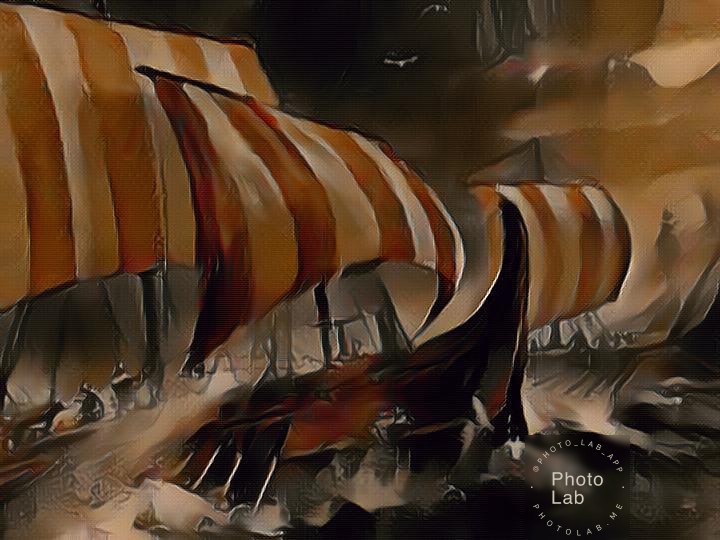
The Veneti occupied the Morbihan Bay and islands nearby. They built their strongholds on coastal eminences which formed islands when the tide was in, and peninsulas when the tide was out. The capital settlement was Darioritum, from where they dominated the Atlantic tin trade and even had their own coins minted. Through the tin trade the Veneti became a powerful thalassocracy, building their massive ships of oak with large transoms fixed by iron nails of a thumb’s thickness. They navigated their ships through the use of stout leather sails. This made their vessels strong, sturdy and structurally sound, capable of withstanding the harsh conditions of the Atlantic. The Veneti controlled the significant and lucrative tin trade with Britain and would appear to hold a naval hegemony over that region of the Celtic fringe. During the Gallic Wars, they were defeated in naval battle and sold to slavery by Julias Caesar. Thereafter their huge ships were copied by the Romans to build their Atlantic fleet. Some ancient writers believed that not all of the Veneti were captured by Rome and that some had escaped in their ships to safety in Scotland and Ireland.
VENETI (Adriatic)
In the region that would go on to become the great trading port of Venice, a tribe of people named the Veneti lived. They traded along the amber route, making pottery, weaving woolen fabrics and growing wheat and vines. Above all else, they were famed in ancient times for breeding great horses. This attracted attention of Dionysus of Syracuse to set up a colony at Adria to acquire a steady supply of these fine steeds. He also dug a canal to facilitate trade further inland. The Veneti even fought off a Spartan led invasion by prince Cleonymus at one point. The origins of the Veneti are unclear. Some say they were Germanic, others Italic or Celtic. There are many myths around their origin, some believe they relate to the fall of Troy while others say they were linked to seafaring Liburians of Dalmatia. The Greek historian Strabo conjectured that the Adriatic Veneti descended from Celts who in turn were related to a later Celtic tribe of the same name who lived on the French coast (Veneti-Gaul). Eventually they adopted the latin tongue and culture and in time became peacefully absorbed into the empire.
VENETI (Vistula, Baltic) Another seemingly unique group called Veneti occupied the far reaches of the South Baltic sea or Venedic bay and around lake Constance, once known as Lake Veneti. Ancient writers appear to have trouble identifying these Veneti as either Sarmation or Germanic. They appeared to be peculiar to their neighbours in customs and language. Strabo speculated that they may have migrated north from the Veneti of the Adriatic. Nearby are the Aestii tribe that according to Tacitius spoke a language like British and were concerned with the trade of amber to the Mediterranean. The Romans led a campaign against the Veneti under generals Drusus Tiberius.
ENETI (Turkey)
The Eneti were a people that inhabited a region close to Paphlagonia. They were mentioned by Strabo and also feature in Homer’s Iliad. In Book II, Homer says that the Enetoi inhabited Paphlagonia on the southern coast of the Black Sea in the time of the Trojan War. The Paphlagonians are listed among the allies of the Trojans in the war. Many ancient writers attribute the origin of the Adriatic Veneti to the migrations of the Eneti following the end of the trojan war, mostly on the basis of the similarity in their tribal name.
VENNICONES (Scotland)
This was a Celtic tribe that was located in Fife, Scotland and on both banks of the river Tay. The tribe’s existence there was recorded between the first and second centuries before perhaps merging into other, later tribal groupings. Unfortunately for the Venicones, they occupied the very region that the Romans were forced to invade several times in order to quell attacks by the Caledonian tribes in the east of the Highlands, including attacks by the ‘Pictish navy’.
The Venicones name was pronounced ‘wen-ichones’, most likely due to a shift in the language. In the case of this tribe, the original name was ‘Venet’. The Romans would probably have mispronounced it giving us Venicones. The origin of the name suggests a link to the Veneti tribe of Armorica. Elements may have fled in their ships to escape Roman advances, arriving in Scotland and Ireland.
VENNICNII (Ireland)
According to the geographer Ptolemy, the Veneti of Gaul fled to Scotland and Ireland after their defeat at the hands of Caesar, settling in County Donegal in Ireland as the Venicii.
None of this can in any way prove that there was any tangible cultural link between the disparate tribal groups that shared the Veneti name. It would seem that classical writers were ready to link any group on the basis of dictionary fishing alone. It was commonplace in early times to associate the origin of many nations to the diaspora of people after the fall of Troy. It is perhaps not so far fetched to imagine that some of the seagoing Veneti of Gaul could have escaped the clutches of Roman retribution, boarding their sturdy ships and sailing to a place of saftey beyond the reaches of Roman rule. Even as far as this cultural link goes, it does not explain why tribes gained the Veneti title in so many areas. The true history of this has been lost to time with archaeology unlikely to reveal solid answers.

 Obscure Antiquity