The islands of Orkney lie off the Northern coast of Britain. Often thought of as a windswept backwater of the prehistoric world, so remote that it is difficult to conceive they would even be known of by classical civilisations like ancient Greece and the Romans.
The first mention of Orkney in the historic record comes as early as 350BC. Although the original works of Greek explorer Pytheas are now lost to history, in 56BC the Greek chronicler Diodorous names “Cape Orcas” as Britain’s most Northern point. It is thought that Diodorous based his information on the earlier account of the journey of the Greek explorer Pytheas of Massalia in his lost work “Concerning the Ocean”
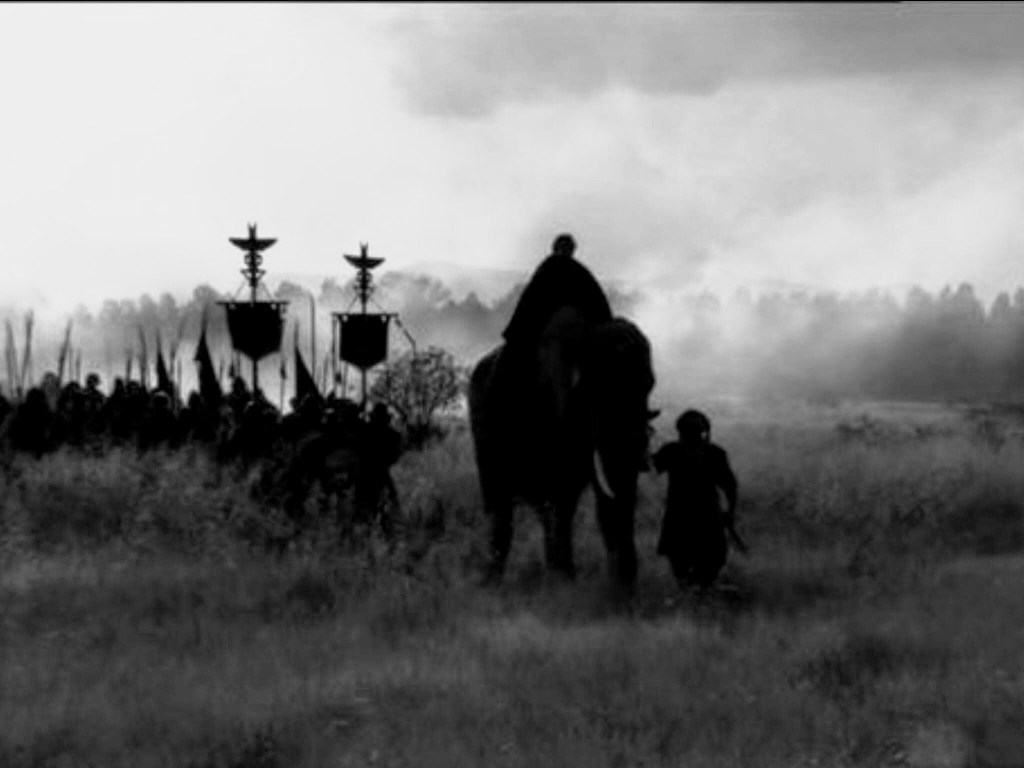
When the Romans first conquered southern Britain under Emperor Claudius in 43AD, it is said that eleven chieftains representing British tribes submitted to Claudius at the Briton tribal capital of Camulodunum (modern Colchester). Claudius arrived to Colchester, crossing a river riding on an elephant in a bid to frighten and impress the natives. At this meeting one of the tribes to submit to Claudius were none other than the Orcadians! Supposedly they copied a trick learned from the Gauls by arriving at the meeting from the south so as to confuse the Romans as to the true direction of their homeland.
The Bern Chronicle — “In the 46th year from the incarnation of our Lord, Claudius was the second of the Romans to invade Britain, and a great part of the island surrendered to him. And he added the isles of Orkney, the isles of the Picts, to the Roman empire and from there he returned to Rome.”
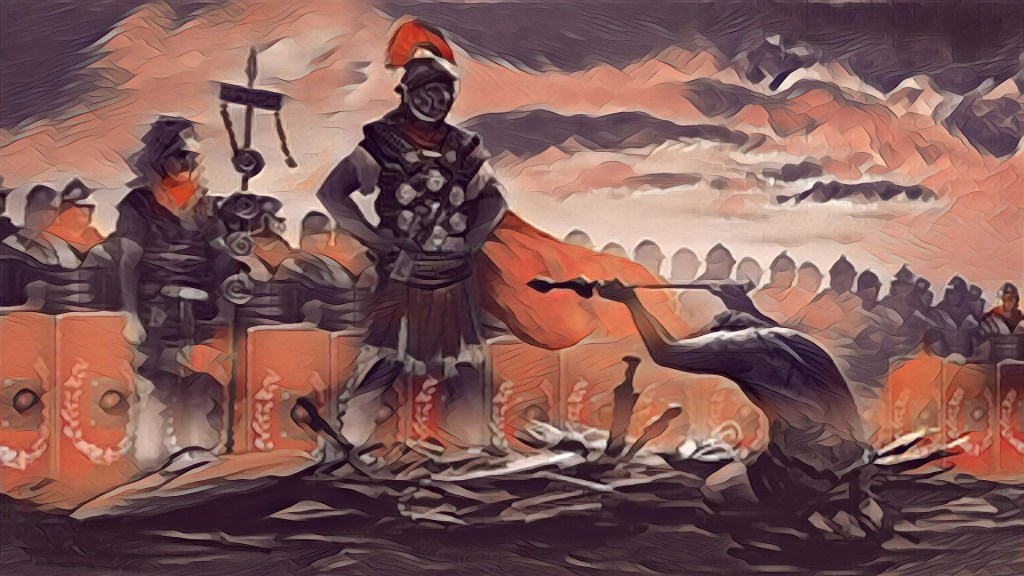
Many years later in 84AD the Romans continued to conquer the rest of Britain by launching an invasion of Caledonia under general Agricola. After easily conquering the the tribes around the central belt, Agricola pushed North, building forts and marching camps throughout the North East as far as Morayshire in the Highlands
At this point the Caledonian tribes formed a confederation and stood against the Romans in a legendary battle named “Mons Graupius”. According to Roman Historian Tacitus, the Romans won a blistering victory against the Caledonians in what could only be described as a Hollywood-esque style utter defeat of the Caledonian resistance.
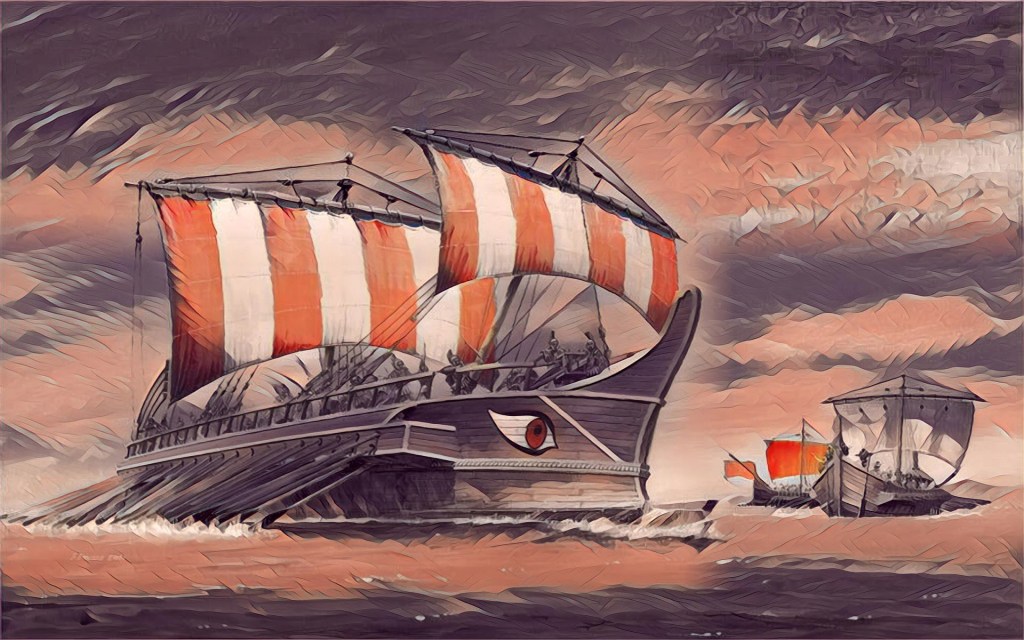
After the battle was over, the Roman general ordered his fleet of ships to sail around the circuit of Britain. Along the way they apparently discovered the Orkney Islands and claimed to have subjugated them.
“Round these coasts of remotest ocean the Roman fleet then for the first time sailed, ascertained that Britain is an island, and simultaneously discovered and conquered what are called the Orcades, islands hitherto unknown. Thule too was descried in the distance, which as yet had been hidden by the snows of winter.”
Tacitus 7
Now, it has been claimed by revisionists that it is unlikely any of this actually occurred at all. That the accounts of Orcadians are merely a Roman invention in order to make it seem like they had conquered the extremity of Britain. Orkney seemed too far remote and irrelevant for Rome’s concern and this may be entirely plausible if it were not for a few shards of pottery excavated from the Broch of Gurness.
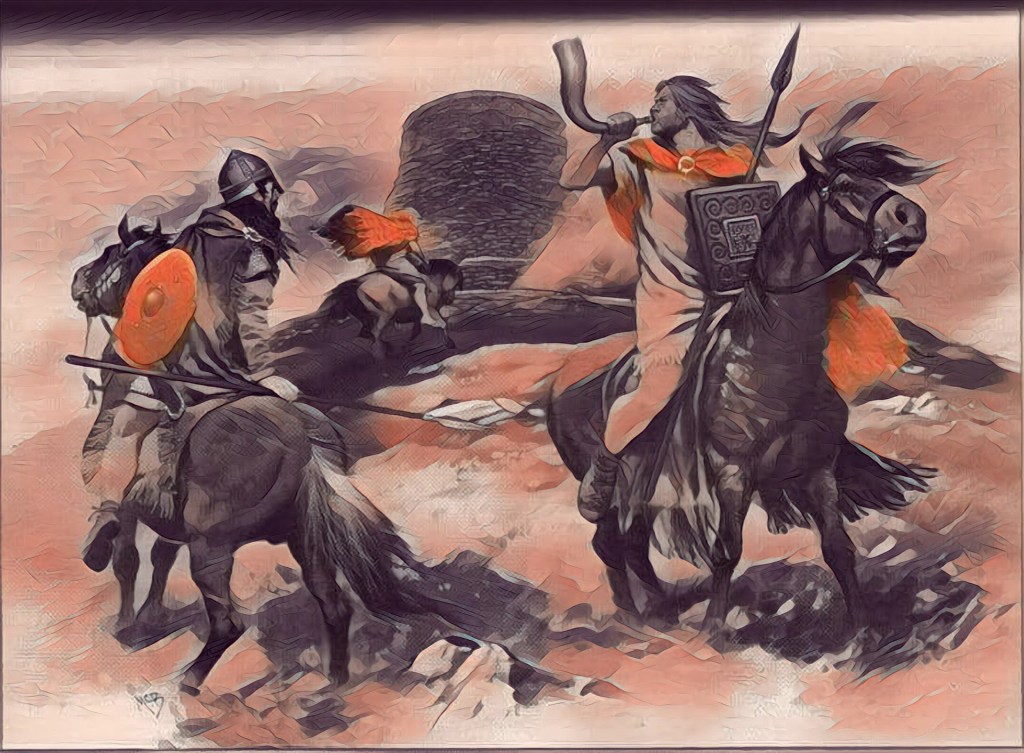
The brochs were iconic drystone towers unique to the North of Scotland and islands. They were occupied during the period of the Roman invasions of Britain. The broch of Gurness could be argued to be the largest and most extensive iron age settlement in Orkney. During the excavation of the broch, shards of Roman pottery were found that were of the more elaborate kind dating from before 84AD. Could these be remains of gifts given to the Orcadian emmissaries sent to Claudius in 43AD in exchange for their submission and compliance?
Furthermore, the Roman presence in Northern Scotland was short lived and the forts built during the Agricolan campaign of 84AD rapidly fell into disuse. They were abandoned after just a number of years and the Romans retreated south to Scotland’s central belt. Curiously, about the same time, brochs like those occupied in Orkney began being built in the conquered Roman territory to the south. Some of these brochs were built within previously occupied native iron age hillforts. Could it be the case that either the broch builders came South with the Romans or the broch builders came South to resist the Romans in alliance with the Southern natives? Either way the Southern brochs remain to be an unexplained mystery of Scottish prehistory. Perhaps they could be the missing link in the story of Rome’s Orcadian connection in the first century AD?
Centuries later, after the Barbarian Invasions and the Great Conspiracy of 396AD, an event that saw the Northern tribes of Picts and Scots-(Irish) unite and attack the Roman provinces to the South, bringing Roman rule in Britain to it’s knees. Count Theodosios was sent to Britain to restore Roman authority and to put an end to the bands of invading Picts and Scots that were ravaging the country. Quickly he set about eliminating the marauding bands by offering them bribes or putting them to the sword. He apparently pursued the Saxon pirates as far as Orkney.
‘The Orkneys were drenched with the slaughter of Saxons, Thule was warm with Pictish blood”
Claudius De IV Consulatu Honorii Augusti, 25-35
One may be forgiven for writing this off as more Roman fantasy and lies. It was after all, written in a pangeric which were works of literature known to be replete with fabrication, embellishments and boasting but…. Only a few decades after Count Theodosious, more Roman writers include “Orcades provincia” as the sixth Roman province in Britain! This again adds fuel to the fire of Orkney’s continued involvement in Roman affairs, if only to project the mindset that it was conquered in order that it would have to be subject to Rome if Britain was ever to be fully considered entirely pacified.
“Britannia perdomita est” (Britain is fully dominated)
There is no explanation as to why “Orcades Provincia” is included in a list of established British provinces written by Polemius Silvius in the 5th century. It may be true that Count Theodosious really did pursue the Saxon pirates as far as Orkney and at the same time (re)-established Roman authority there if but only for a short time. Indeed nothing indicates the contrary other than revisionist scholarly opinion that Orkney remained too far remote to be of any significance to the Roman sphere of influence. Although the many classical sources on the matter go largely ignored in favour of this revisionist viewpoint.
There can be no mistake that Orkney merited mention by classical writers from as early as the 4th century BC until the eventual fall of the Western Roman empire. Whether this was just an embellished boast to exaggerate the extent of the empires reach, or in fact that Orkney was a strategic tribal centre key to the native defense and subsequently the Roman dominion over Britain, remains to be proven outright. There can be no doubt that Orkney, remote as it is, was an important place in the minds of Roman writers throughout the ages. Certainly a place they desired to conquer or at the very least make the Roman public believe it was made subject to Roman authority. Why else would they have spent so much effort in writing about it throughout the ages???
Iain MacLean is the founder of the Caithness Broch Project. An archaeological charity with the aim of rebuilding an iron age broch as an experimental archaeological project. He is an avid reader of the classics, feeling that far too many words are given over to the stories of Alexander, Athens and Sparta and not enough light is shed on the lesser known stories of antiquity. With a special interest in obscure Ancient cultures and traditional skills.
View all posts by Iain Maclean


 Obscure Antiquity